On this day · 27 September 2026

When a Nation Becomes a Biosphere

· 5 min

When a Nation Becomes a Biosphere

Listen to this episode

5 min

Understanding São Tomé and Príncipe's ecological achievement highlights global conservation efforts, while revisiting past events like UFO sightings and Google's rise reminds us of humanity's constant curiosity and innovation.

If declaring an entire country a UNESCO World Biosphere Reserve sounds ambitious, let me introduce you to São Tomé and Príncipe. Known for their rich biodiversity, these two African islands in the Gulf of Guinea have transformed from well-kept environmental secret to international ecological model. But why the big fuss over a country becoming a biosphere, and how on Earth did they manage it?

A Nation Becomes a Biosphere

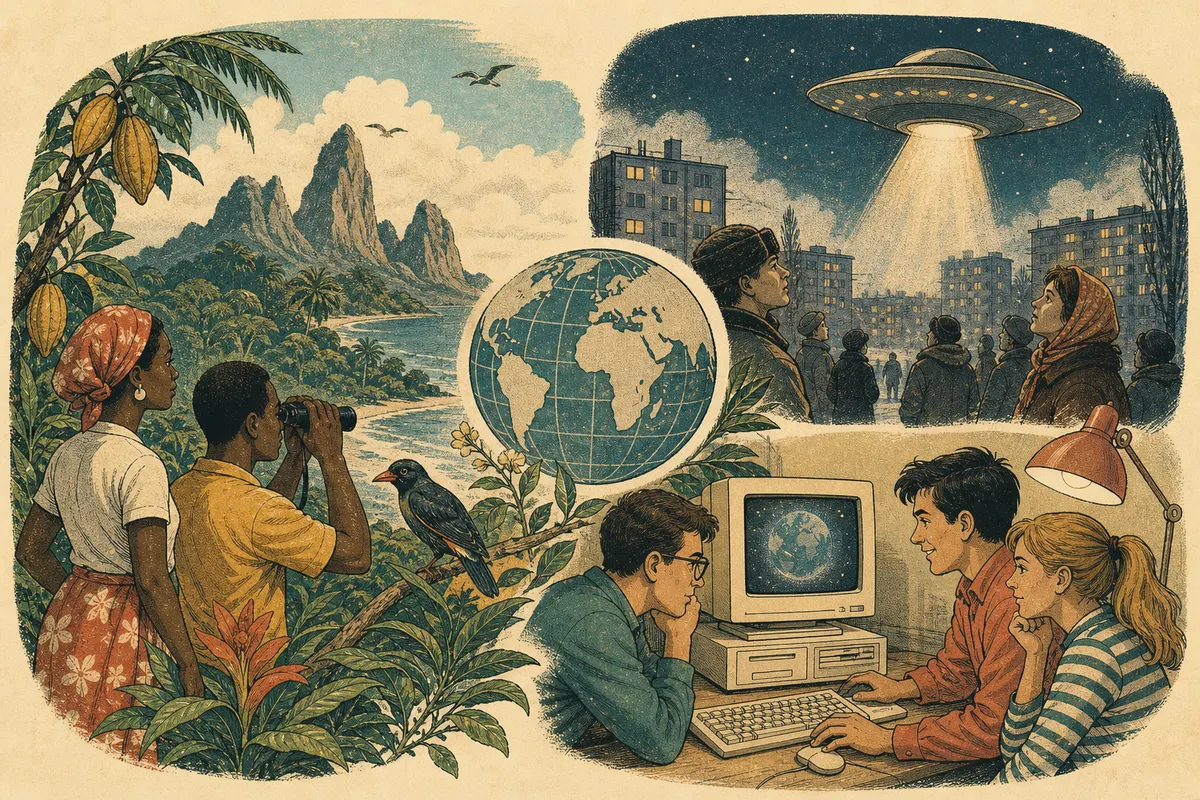
The lush landscapes of São Tomé and Príncipe became famous by being recognised as the first nation declared a UNESCO World Biosphere Reserve. This is not just about slapping on a fancy title; it’s a nod to their vigorous conservation efforts. Their strategy includes sustainable use of their rich natural resources while protecting unique species like the critically endangered Príncipe Thrush.

To say the designation is a feather in their cap is an understatement. It establishes them as a pivotal player in global biodiversity, setting a benchmark for how small nations can lead on the ecological stage.

The Vorónezh Incident

From environmental achievements to something a bit out of this world: 1989 in the Soviet town of Vorónezh was the year of the UFO. Residents reported a UFO landing in their town, complete with aliens who allegedly took a brief holiday from their usual cosmic rounds. While sceptics sniffed at the idea, it captured the world’s imagination and reminded us of how easily mystery can captivate a curious mind.

Google Enters the Web

Fast forward to 1998, and we’re swapping flying saucers for search engines. This was the year Google emerged from a garage in Silicon Valley and proceeded to turn the internet upside down. It wasn’t just another search engine; it was a revolution that changed how we accessed information. Suddenly, the ancient art of rifling through yellowed encyclopaedias felt very 1997.

The First Steam Railway

Finally, let’s steam ahead to 1825, when the world’s first public railway using steam locomotives came chugging into existence in England. The Stockton and Darlington Railway didn’t just get passengers from A to B; it heralded the beginning of our modern transport age.

In a world where nations become biospheres, aliens take strolls, digital searches replace libraries, and railways bring steam into public life, curiosity and ingenuity have always driven human history. Join me in this episode to unravel these stories that blend triumph and whimsy in equal measure.

In this episode

  • Intro Introduction to the episode, setting the stage for stories about environmental honours and technological milestones.
  • A Nation Becomes a Biosphere São Tomé and Príncipe is declared a UNESCO World Biosphere Reserve, highlighting its rich biodiversity and conservation efforts.
  • The Vorónezh Incident In 1989, residents of Vorónezh claimed to witness a UFO landing, sparking worldwide intrigue and various interpretations.
  • Google Enters the Web In 1998, Google launched its search engine, changing how information was accessed online with its innovative approach.
  • The First Steam Railway The opening of the Stockton and Darlington Railway in 1825 marked the debut of public steam locomotive travel.
  • Outro Closing remarks summarising the episode, with a reminder of human overconfidence throughout history.

Sources

More from the archive

5 min

The Unending Hunt for the Golden Owl

Explore the captivating tale of The Hunt for the Golden Owl, a treasure hunt that spanned over thirty years, initiated by French author Max Valentin and artist Michel Becker in 1993. Discover the extraordinary story of a bronze owl and a grand prize of a golden owl adorned with diamonds. Despite Valentin’s cryptic style and the frustrations faced by treasure hunters, the hunt concluded in 2024, yet its legacy lingers. Delve into the significance of Gaecheonjeol in South Korea, where the mythical descent of Hwanung is celebrated. Examine the impact of the O. J. Simpson acquittal on popular culture and the explosive revelations of the Pandora Papers in 2021, which unveiled the hidden wealth of the world’s elite, sparking debates on financial transparency. Join Clara Vale as she navigates these compelling narratives in The Daily Time Drop.

Read & listen →
4 min

The Nottingham Cheese Riot and Beyond

In this episode of The Daily Time Drop, Clara Vale delves into a peculiar chapter of history: the Nottingham Cheese Riot of 1766. What began as an ordinary day at Nottingham’s Goose Fair transformed into a chaotic scene due to soaring cheese prices. Locals, outraged by the cost hike, took matters—and cheese—into their own hands, resulting in a riot quelled only by militia intervention. Clara then shifts focus to a 2023 event involving the US Federal Communications Commission’s action against Dish Network for neglecting space debris, marking a significant step in tackling space pollution. Next, we look forward to a celestial spectacle: the solar eclipse in Patagonia in 2024. Finally, Clara reflects on the origins of parkrun in 2004, a small initiative that evolved into a global movement championing community fitness. Each story illustrates unique instances of human behaviour, from passionate protests to inspiring initiatives.

Read & listen →
4 min

Milestone Moments: Breaking Barriers and Reshaping History

On today’s episode of The Daily Time Drop, host Clara Vale delves into a day rich with historical significance and cultural milestones. We explore how Claudia Sheinbaum made history in 2024 as Mexico’s first female president and the country’s first president of Jewish heritage. This groundbreaking moment challenges conventions and inspires a new generation. We also highlight Karolina Styczyńska’s remarkable journey as she became Japan’s first non-Japanese professional shogi player in 2015, breaking long-standing cultural barriers. Additionally, we recount the United States’ return to UNESCO in 2023, a sign of shifting diplomatic ties. Lastly, we touch upon Koromogae, Japan’s charming tradition of changing wardrobes with the seasons. Each story offers a glimpse into how everyday events and extraordinary accomplishments shape our world.

Read & listen →