The impulse to impose your vision on the world, whether through taxation, centuries-long endurance art, or sheer competitive ambition, is as current as any headline. History keeps asking, quietly, what any of it was actually for.
If you ever feel underdressed for a party, spare a thought for Nicolas Fouquet. He threw the most spectacular gathering in seventeenth-century France, and it got him arrested.
That arrest happened on 5 September 1661, and it turns out history saved several of its more peculiar moments for that particular date. A tsar took scissors to his courtiers’ sleeves. A concert started that will not finish until 2640. And a Formula One world championship was decided in favour of a driver who was no longer alive to collect it.
Peter the Great and His Very Expensive Beard Policy
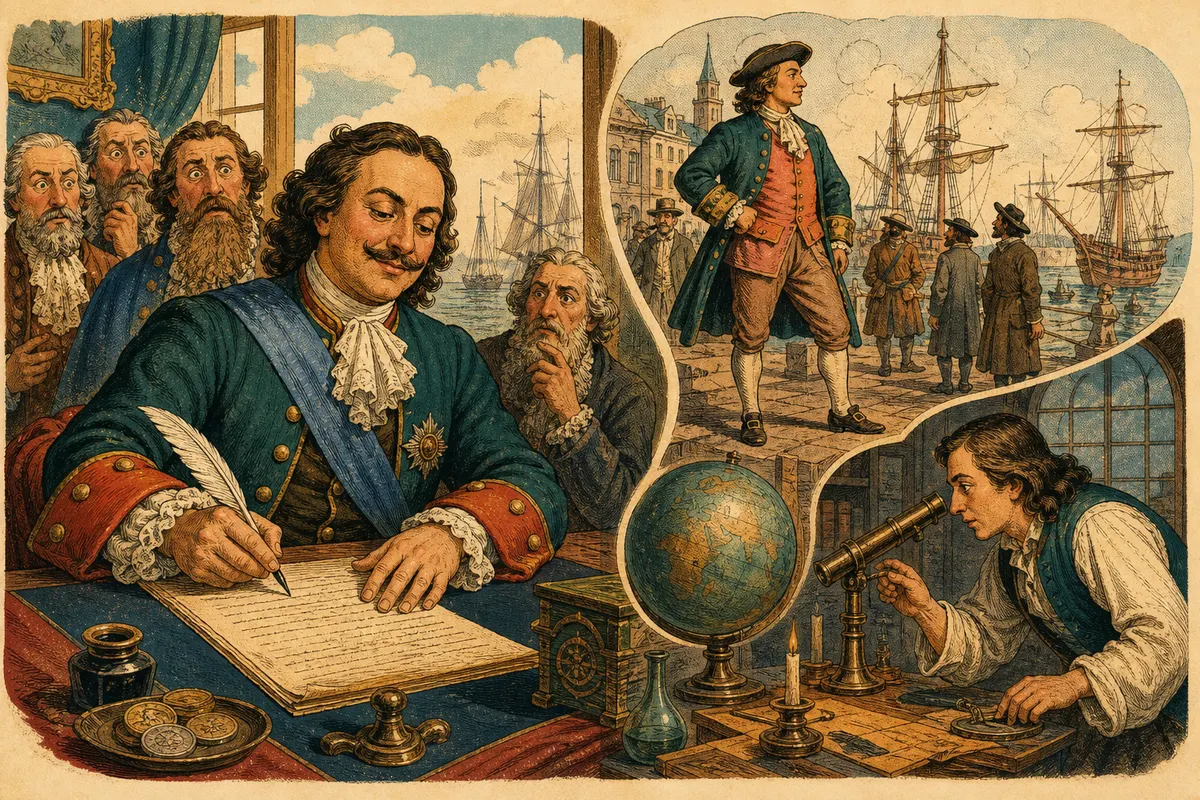
On 5 September 1698, Peter the Great signed into law a tax on beards. He had spent eighteen months travelling incognito around Western Europe and returned with strong opinions about what his nobility’s faces should look like. Men who paid the tax received tokens proving they were licensed to keep their own facial hair. Those who did not could expect the tsar to enforce his vision of modernity rather personally: he cut sleeves off robes he found insufficiently progressive. Progress, administered at close range.
The Concert That Will Outlast Everyone Reading This
Also on 5 September, but in 2001, a performance of John Cage’s organ piece began in Halberstadt, Germany. The piece is scheduled to finish in 2640, a 639-year concert. It opened with seventeen months of silence. Chord changes are announced years in advance. It is either the most patient act of artistic ambition ever conceived, or an extraordinarily slow joke, or both. Those two things are not mutually exclusive.
The Real D’Artagnan, the Borrowed Party, the Furious King
Three weeks after hosting a party grand enough to enrage Louis XIV, Nicolas Fouquet was arrested on 5 September 1661. The officer who made the arrest was Charles de Batz de Castelmore d’Artagnan, the actual musketeer captain whom Alexandre Dumas later fictionalised. History is strange enough without novelists improving on it.
The Champion Who Never Lifted the Trophy
On 5 September 1970, Austrian driver Jochen Rindt was killed during practice at Monza. His points lead in the Formula One championship was so commanding that no other driver could mathematically overtake him in the races that remained. He became the sport’s first and only posthumous world champion. It is, quietly, one of the saddest records in sport.
Four stories from one date, and none of them are quite what you would expect from a history lesson. The episode is ten minutes. The beard token is free to imagine.