Assumptions are comfortable until history quietly proves them wrong. A species hiding in plain sight, an imaginary person who became genuinely real, and a stolen painting that found its way back: these three stories are still asking questions worth sitting with.
Three things happened on 31 August, across three separate years, that had no business being as quietly astonishing as they turned out to be.
The Dog That Never Actually Left
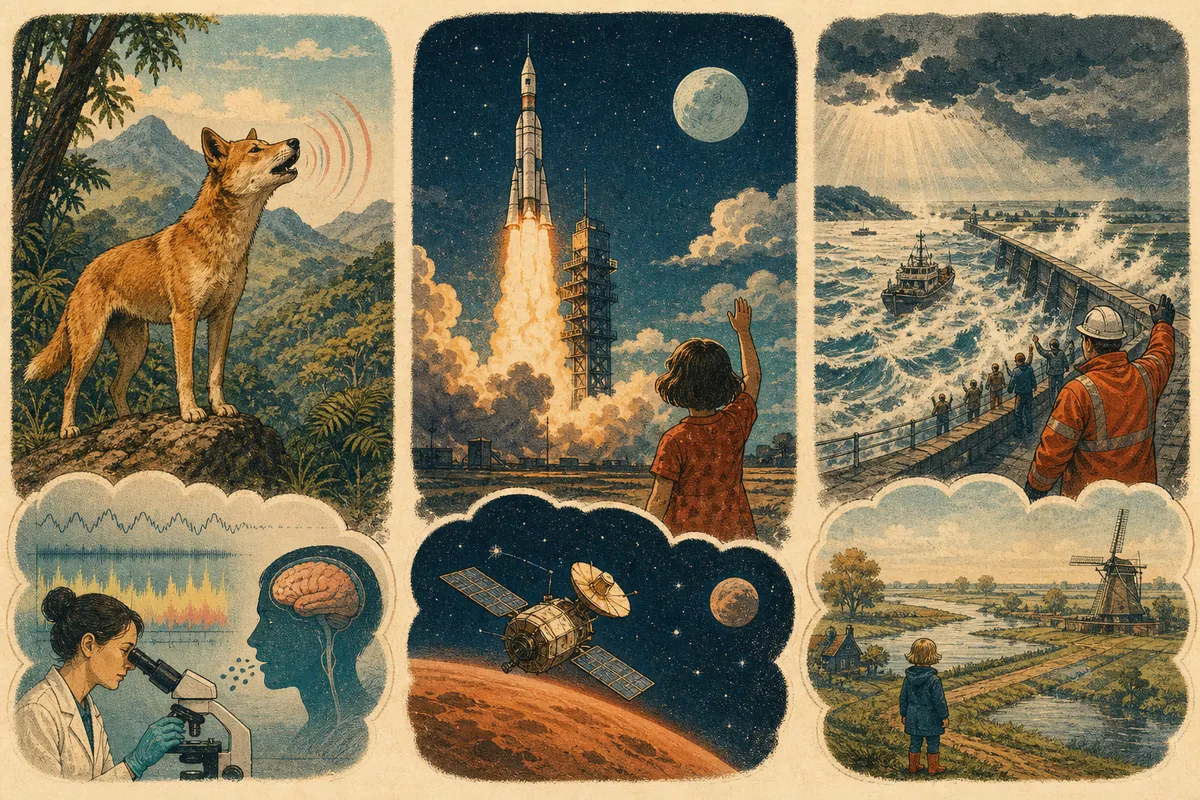
In 2020, scientists published genetic evidence confirming that the New Guinea Singing Dog, a small fox-faced canid considered extinct in the wild since the 1970s, had been getting along perfectly well without anyone’s concern in remote highland valleys. The research confirmed that highland wild dogs in New Guinea share the same lineage as captive populations held in conservation programmes.
The singing part matters. This species produces unusually complex vocalisations that harmonise in ways researchers believe could help shed light on human speech disorders. It had simply been surviving, untroubled, in parts of the world nobody was looking at carefully enough.
The Pop Star Made of Nothing at All
On 31 August 2007, Japanese software company Crypton Future Media released Hatsune Miku, a Vocaloid voice synthesiser marketed as a virtual pop star. That sounds like a gimmick until you consider what happened next.
Creative communities around the world wrote thousands of songs for her. She performed holographic concerts to sold-out crowds. She became a genuine cultural phenomenon, built not by a label or a PR team but by the collective imagination of fans who decided, collectively, that she was real enough. She never existed. She also, very clearly, exists.
The Painting That Came Home (Somewhat Worse for Wear)
On 31 August 2006, Norwegian police recovered Edvard Munch’s The Scream and Madonna, two years after armed thieves walked into the Munch Museum in broad daylight and took them. The paintings had suffered water damage during their absence but were eventually restored and returned to display.
Stealing one of the world’s most recognisable images is, it turns out, considerably easier than working out what to do with it afterwards.
Why It All Adds Up
A species we wrote off. A person we invented. A painting we thought was gone. Three dates, three stories, one recurring theme: the gap between what we assume and what is actually true is often much wider than the data suggests, and occasionally much more interesting.
The episode is ten minutes. It earns every one of them.