On this day · 28 August 2026

The Collar Bomb Heist, Asteroid Moons, and a Reluctant Candidate

· 10 min

The Collar Bomb Heist, Asteroid Moons, and a Reluctant Candidate

Listen to this episode

10 min

The collar bomb case raised questions about complicity and manipulation that investigators never fully resolved, and it remains one of the FBI's most studied crimes. The discovery of Dactyl, meanwhile, quietly rewrote what scientists thought they knew about what an asteroid could be.

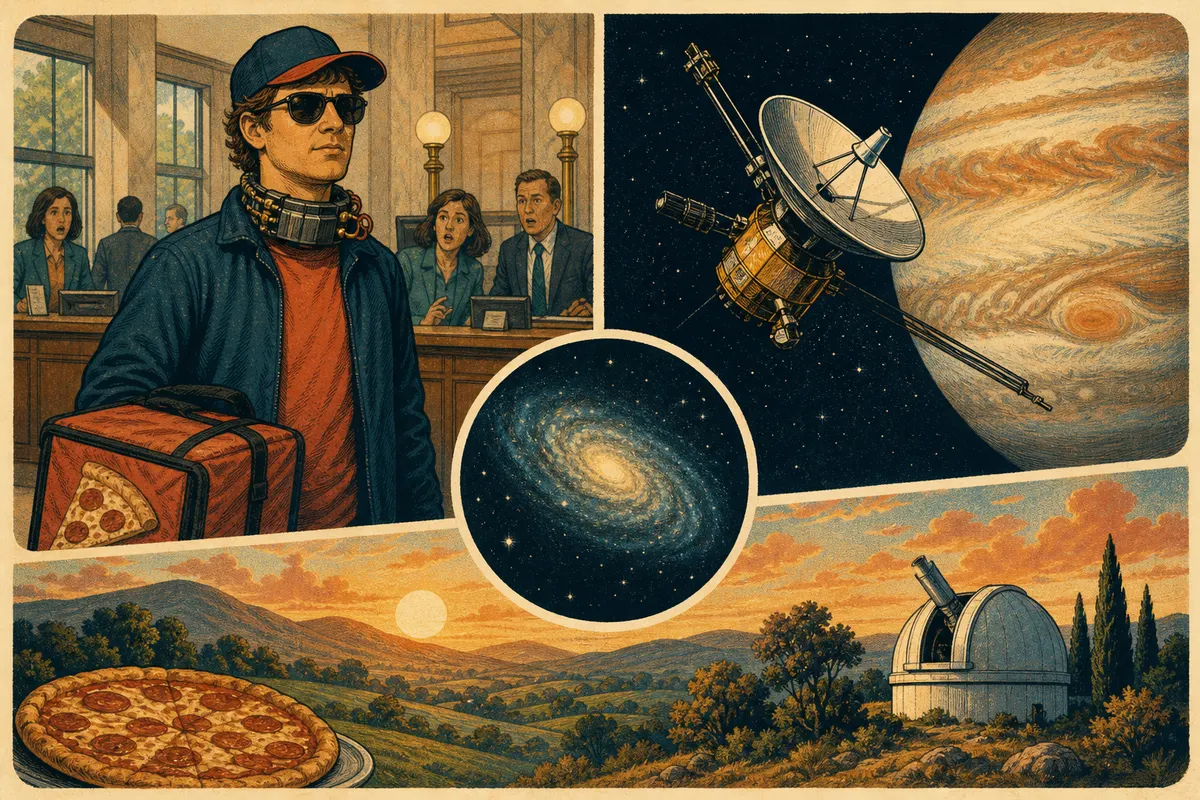
On 28 August 2003, a pizza delivery driver in Erie, Pennsylvania walked into a bank with a bomb locked around his neck. His name was Brian Wells, and what followed would be described by the FBI as one of the most bizarre crimes in its history. Not a superlative they hand out lightly.

Wells had been given an elaborate scavenger hunt. The device around his neck was real. And there were twenty-two minutes on the clock. The scheme had been planned by Marjorie Armstrong and Kenneth Barnes, involving carefully constructed notes, timed tasks, and a device that represented hours of deliberate preparation directed towards something terrible. Investigators spent years on the case. The question they kept returning to, and never quite resolved to anyone’s satisfaction, was how much Wells himself actually knew.

The Moon Nobody Was Looking For

Ten years earlier to the day, on 28 August 1993, NASA’s Galileo spacecraft flew past asteroid Ida. It was a routine flyby; nobody expected anything remarkable. But when scientists examined the photographs, something appeared in the corner of the frame: a tiny rock, orbiting Ida. It was named Dactyl, and it became the first confirmed moon of an asteroid ever discovered, found entirely by accident, in the margin of a photograph nobody was scrutinising for moons.

There is something quietly pleasing about that. You glance sideways from what you were doing, and suddenly there is a new category of thing in the universe.

An Election With One Real Candidate

Also on 28 August 1993, Singapore held its first popular presidential election. Ong Teng Cheong won. His opponent, however, had been recruited specifically by the government to make the ballot look contested. So: an election, yes. A genuine contest, loosely speaking.

Three stories from the same date, across different years. A crime too strange for easy answers. A cosmic discovery hiding in a photograph’s corner. And an election that told you considerably more about its designers than its voters.

History doesn’t always announce itself with trumpets. The full episode is ten minutes and goes into considerably more detail on all three, including that uncomfortable question about exactly what Brian Wells knew. Worth your time.

In this episode

  • A Bank Robbery Nobody Planned For The story opens with Brian Wells, a pizza delivery driver in Erie, Pennsylvania, who on 28 August 2003 walked into a bank with a bomb locked around his neck. The device was real, the scavenger hunt he’d been given was elaborate, and the twenty-two minutes before the bomb detonated would haunt investigators for years.
  • The Most Bizarre Crime in FBI History The collar bomb case unravelled into one of the FBI’s most complicated investigations. Planned by Marjorie Armstrong and Kenneth Barnes, the crime involved elaborate notes, timed tasks, and a device that represented hours of careful construction directed towards something terrible. The question of how much Wells knew remains uncomfortable.
  • A Moon Nobody Expected On the same date in 1993, NASA’s Galileo spacecraft flew past asteroid Ida and accidentally photographed something in the corner of its images: Dactyl, a tiny moon orbiting the asteroid. It was the first confirmed asteroid moon in history, discovered entirely by chance during a routine flyby.
  • Singapore’s Election with a Reluctant Opponent Also on 28 August 1993, Singapore held its first popular presidential election. Ong Teng Cheong won, but one detail stood out: his opponent had been recruited by the government specifically to make the ballot look contested. Democracy, with its choices pre-sorted.
  • History in the Corners Three stories from 28 August: a crime too strange for easy answers, a cosmic discovery hiding in a photograph’s margin, and a democratic exercise that revealed more than intended. History doesn’t always arrive with trumpets; sometimes it turns up in places no one was quite looking.

Sources

More from the archive

5 min

The Unending Hunt for the Golden Owl

Explore the captivating tale of The Hunt for the Golden Owl, a treasure hunt that spanned over thirty years, initiated by French author Max Valentin and artist Michel Becker in 1993. Discover the extraordinary story of a bronze owl and a grand prize of a golden owl adorned with diamonds. Despite Valentin’s cryptic style and the frustrations faced by treasure hunters, the hunt concluded in 2024, yet its legacy lingers. Delve into the significance of Gaecheonjeol in South Korea, where the mythical descent of Hwanung is celebrated. Examine the impact of the O. J. Simpson acquittal on popular culture and the explosive revelations of the Pandora Papers in 2021, which unveiled the hidden wealth of the world’s elite, sparking debates on financial transparency. Join Clara Vale as she navigates these compelling narratives in The Daily Time Drop.

Read & listen →
4 min

The Nottingham Cheese Riot and Beyond

In this episode of The Daily Time Drop, Clara Vale delves into a peculiar chapter of history: the Nottingham Cheese Riot of 1766. What began as an ordinary day at Nottingham’s Goose Fair transformed into a chaotic scene due to soaring cheese prices. Locals, outraged by the cost hike, took matters—and cheese—into their own hands, resulting in a riot quelled only by militia intervention. Clara then shifts focus to a 2023 event involving the US Federal Communications Commission’s action against Dish Network for neglecting space debris, marking a significant step in tackling space pollution. Next, we look forward to a celestial spectacle: the solar eclipse in Patagonia in 2024. Finally, Clara reflects on the origins of parkrun in 2004, a small initiative that evolved into a global movement championing community fitness. Each story illustrates unique instances of human behaviour, from passionate protests to inspiring initiatives.

Read & listen →
4 min

Milestone Moments: Breaking Barriers and Reshaping History

On today’s episode of The Daily Time Drop, host Clara Vale delves into a day rich with historical significance and cultural milestones. We explore how Claudia Sheinbaum made history in 2024 as Mexico’s first female president and the country’s first president of Jewish heritage. This groundbreaking moment challenges conventions and inspires a new generation. We also highlight Karolina Styczyńska’s remarkable journey as she became Japan’s first non-Japanese professional shogi player in 2015, breaking long-standing cultural barriers. Additionally, we recount the United States’ return to UNESCO in 2023, a sign of shifting diplomatic ties. Lastly, we touch upon Koromogae, Japan’s charming tradition of changing wardrobes with the seasons. Each story offers a glimpse into how everyday events and extraordinary accomplishments shape our world.

Read & listen →