On this day · 14 August 2026

The Night That Sparked the Only Successful Slave Revolution in History

· 12 min

The Night That Sparked the Only Successful Slave Revolution in History

Listen to this episode

12 min

The Haitian Revolution remains the only successful slave revolution in recorded history, and the reparations France forced on Haiti afterwards shaped the country's fortunes for over a century. It is a story about what victory costs, which makes it worth knowing properly.

There are moments in history that begin very quietly, in a forest clearing, in a document, on a battlefield no one thought to name, and then proceed to change absolutely everything.

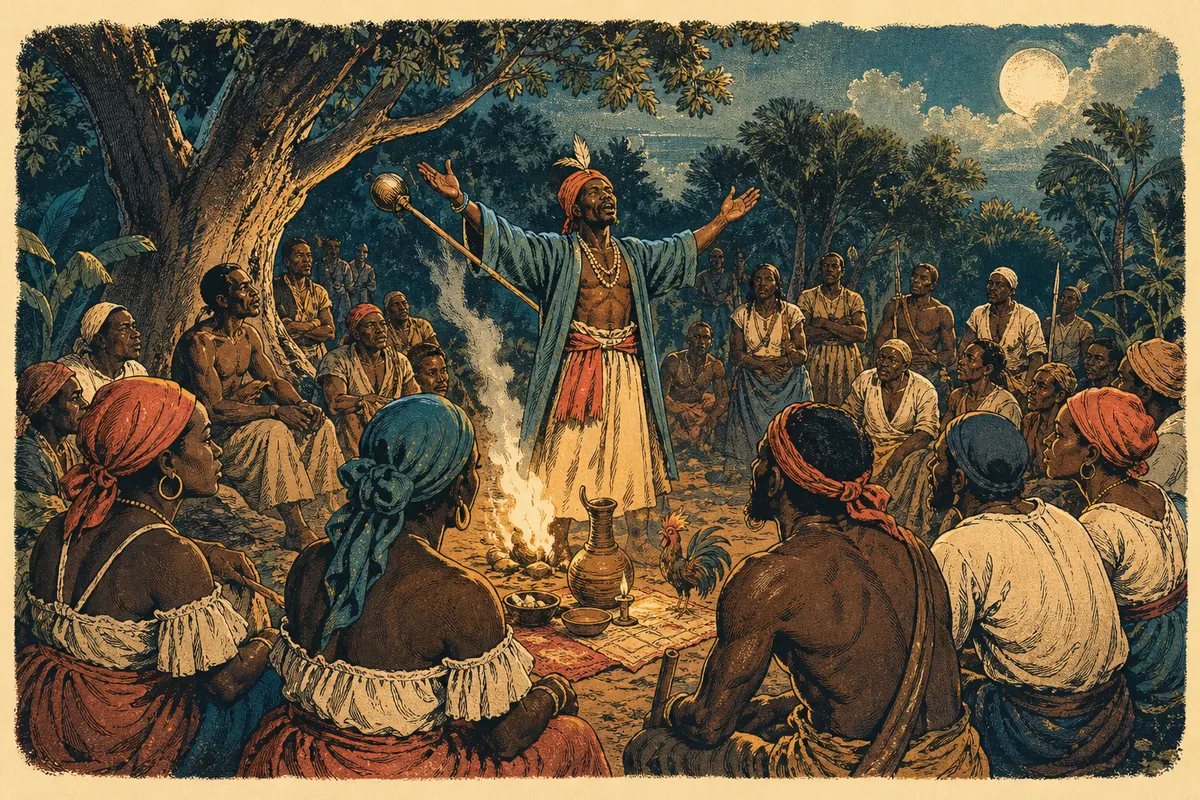
On 14 August 1791, a gathering took place in a forest clearing called Bois Caïman, in the French colony of Saint-Domingue. It was a Vodou ceremony, led by a priest named Dutty Boukman. What it sparked was thirteen years of revolution that would end with the creation of Haiti: the first Black republic in history, and the only successful slave revolution the world has ever seen.

The Night at Bois Caïman

The conditions in Saint-Domingue were brutal. The revolution that grew from that ceremony eventually brought down Napoleon’s ambitions in the Caribbean and proved that the institution of slavery was not, in fact, invincible.

France’s response, once it could no longer hold on, was to force Haiti to pay reparations. This debt crippled the new nation for over a century. The revolution succeeded; the punishment for succeeding lasted considerably longer.

The Other Drops

14 August has form for producing events that feel impossible on paper.

In 63 BCE, Chinese Emperor Liu He was impeached after just twenty-seven days on the throne. He had reportedly committed over a thousand offences in less than a month. History does not specify exactly how one achieves that, but it does record that he was removed, which suggests someone was keeping meticulous notes.

In 1720, the Villasur expedition met Pawnee and Otoe warriors at the Battle of the Platte River, and lost. Spanish ambitions in the Great Plains ended there. Not every imperial plan makes it back.

And in 1952, French economist Alfred Sauvy coined the term “tiers-monde”, or Third World, a phrase that would reshape geopolitical conversation for decades whilst attracting criticism for flattening the complex differences between vastly different nations into a single tidy category.

Why Listen

Today’s episode covers all of it: the ceremony at Bois Caïman, the revolution it ignited, the reparations that followed, and three other moments from this date that arrived quietly before changing things entirely. Ten minutes. Worth every one of them.

In this episode

  • Introduction Setting the scene for 14 August 1791 in the French colony of Saint-Domingue, where a ceremony in the forest would begin a revolution that changed world history.
  • The Night at Bois Caïman The story of the Vodou ceremony led by Dutty Boukman that sparked the Haitian Revolution, from the brutal conditions of Saint-Domingue through to Haiti’s independence in 1804 and the devastating reparations France later imposed.
  • The Emperor Who Lasted Twenty-Seven Days How Chinese Emperor Liu He was impeached in 63 BCE after just twenty-seven days on the throne, having reportedly committed over a thousand offences in less than a month.
  • The Spanish Expedition That Never Made It Back The 1720 Battle of the Platte River, where Pawnee and Otoe warriors defeated the Villasur expedition and ended Spanish ambitions of expansion into the Great Plains.
  • The Day Someone Invented the Third World French economist Alfred Sauvy coins the term ‘tiers-monde’ in 1952, creating a phrase that would reshape geopolitical discourse for decades whilst attracting criticism for flattening complex differences between nations.
  • Closing Thoughts Reflecting on how history often begins quietly, in forests or documents or forgotten battlefields, before changing everything.

Sources

More from the archive

5 min

The Unending Hunt for the Golden Owl

Explore the captivating tale of The Hunt for the Golden Owl, a treasure hunt that spanned over thirty years, initiated by French author Max Valentin and artist Michel Becker in 1993. Discover the extraordinary story of a bronze owl and a grand prize of a golden owl adorned with diamonds. Despite Valentin’s cryptic style and the frustrations faced by treasure hunters, the hunt concluded in 2024, yet its legacy lingers. Delve into the significance of Gaecheonjeol in South Korea, where the mythical descent of Hwanung is celebrated. Examine the impact of the O. J. Simpson acquittal on popular culture and the explosive revelations of the Pandora Papers in 2021, which unveiled the hidden wealth of the world’s elite, sparking debates on financial transparency. Join Clara Vale as she navigates these compelling narratives in The Daily Time Drop.

Read & listen →
4 min

The Nottingham Cheese Riot and Beyond

In this episode of The Daily Time Drop, Clara Vale delves into a peculiar chapter of history: the Nottingham Cheese Riot of 1766. What began as an ordinary day at Nottingham’s Goose Fair transformed into a chaotic scene due to soaring cheese prices. Locals, outraged by the cost hike, took matters—and cheese—into their own hands, resulting in a riot quelled only by militia intervention. Clara then shifts focus to a 2023 event involving the US Federal Communications Commission’s action against Dish Network for neglecting space debris, marking a significant step in tackling space pollution. Next, we look forward to a celestial spectacle: the solar eclipse in Patagonia in 2024. Finally, Clara reflects on the origins of parkrun in 2004, a small initiative that evolved into a global movement championing community fitness. Each story illustrates unique instances of human behaviour, from passionate protests to inspiring initiatives.

Read & listen →
4 min

Milestone Moments: Breaking Barriers and Reshaping History

On today’s episode of The Daily Time Drop, host Clara Vale delves into a day rich with historical significance and cultural milestones. We explore how Claudia Sheinbaum made history in 2024 as Mexico’s first female president and the country’s first president of Jewish heritage. This groundbreaking moment challenges conventions and inspires a new generation. We also highlight Karolina Styczyńska’s remarkable journey as she became Japan’s first non-Japanese professional shogi player in 2015, breaking long-standing cultural barriers. Additionally, we recount the United States’ return to UNESCO in 2023, a sign of shifting diplomatic ties. Lastly, we touch upon Koromogae, Japan’s charming tradition of changing wardrobes with the seasons. Each story offers a glimpse into how everyday events and extraordinary accomplishments shape our world.

Read & listen →