On this day · 23 July 2026

How We Dodged a Solar Bullet

· 6 min

How We Dodged a Solar Bullet

Listen to this episode

6 min

In a world reliant on technology, understanding the potential impact of solar storms is crucial. It highlights our fragility and resilience in equal measure.

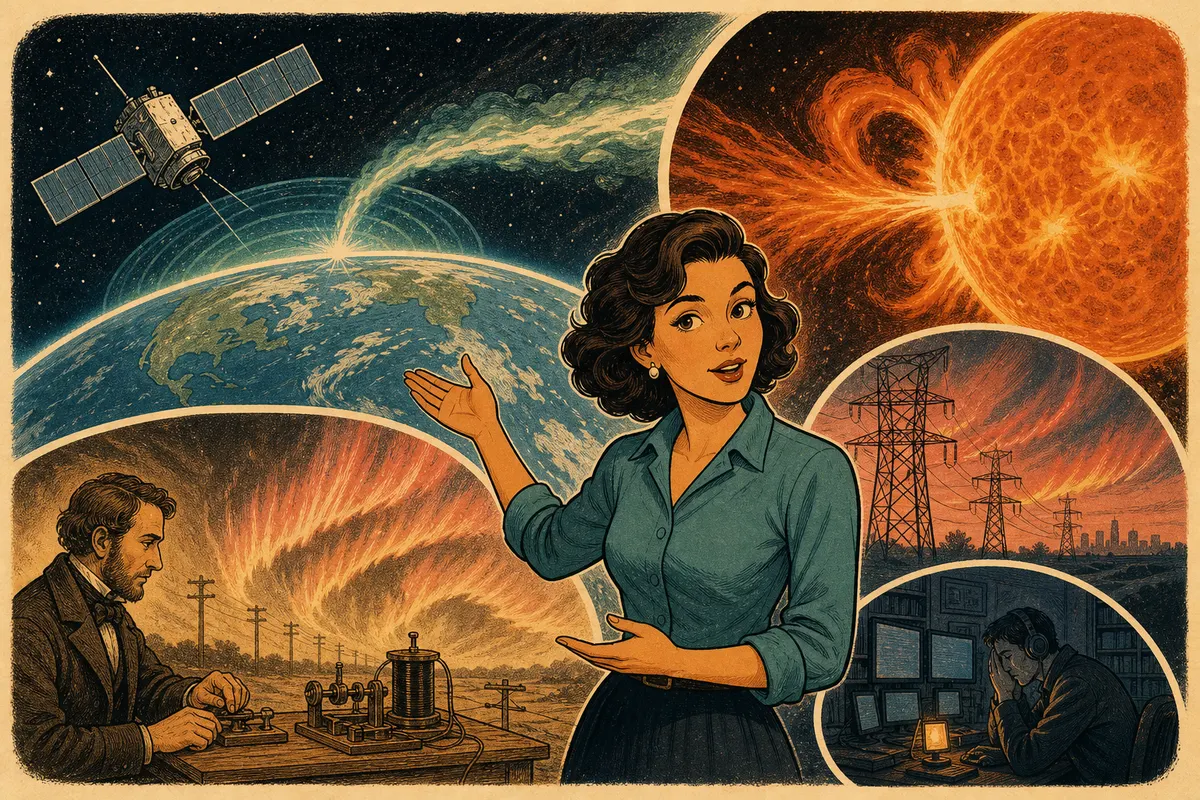
Imagine a tempest so vast it could plunge us into digital darkness and dismantle the very networks tethering our modern lives. Back in 2012, a solar storm of epic proportions barely missed Earth, skimming past our cozy rock and sparing us from an astronomical reality check. This could-have-been crisis is more than just a footnote in space weather chronicles—it’s a cosmic reminder of the celestial forces at play above us.

The Near Miss of 2012

The solar storm of 2012 possessed the potential to wreak havoc on a $2.6 trillion scale. Our planet fortuitously sidestepped a cataclysm akin to the Carrington Event of 1859. That earlier event resulted in spectacular auroras and, more concerningly, the stunning ability to incapacitate telegraph systems across the globe. Today, with our far more complex infrastructure, the stakes are exponentially higher. The 2012 near miss is a wake-up call wrapped in coronal mass ejection splendour—one that should stir a little more awe and fear into our space weather observations.

Hindsight and Human Ingenuity

There’s a special charm in recognising how past events prepare us for future challenges. The episode also celebrates those slices of human brilliance that emerged in the face of adversity. Take William Austin Burt’s Typographer of 1829, a clunky prototype essential for the evolution of the typewriter. While it may have seemed like a ponderous innovation at the time, it unlocked the pathways to modern communication as we now know it.

Then there is Henry Ford’s first foray into affordable car manufacture in 1903 with the Model A. It wasn’t just a car—it was a catalyst for unprecedented social connectivity. Ford made the notion of mobility accessible, redefining the way people interacted with space and time.

Why You Should Listen

Join me on this intriguing journey through historical close calls and pioneering inventions that shaped our world. You’ll find that the past is full of narrow escapes and brilliant breakthroughs that continue to resonate today. Discovering the blend of cosmic near-misses and human tenacity in this episode might just offer you a new perspective on how we dance with history’s ticking clock. Listen in to appreciate how sometimes, in the grand theatre of the universe, we unknowingly dodge a solar bullet.

In this episode

  • Intro Imagine a storm so cosmic it could knock out power grids worldwide. Welcome to The Daily Time Drop.
  • The Solar Storm of 2012 The 2012 solar storm missed Earth but had the potential for $2.6 trillion in damages, akin to the Carrington Event of 1859.
  • CTA Encouragement to follow the show and share with a curious friend.
  • Burt’s Typographer In 1829, William Austin Burt’s typographer laid the groundwork for the modern typewriter, despite its early challenges.
  • Ford’s First Car In 1903, Henry Ford revolutionised mobility with the affordable Model A, impacting society’s connectivity.
  • Outro Reflecting on escaping chaos and celebrating pioneering ideas that shape our modern world.

Sources

More from the archive

7 min

Collision of the Unexpected: Trump, Vigdís, and Kelston's Ingenuity

In this episode of The Daily Time Drop, host Clare Vale unravels a tapestry of global historical moments that reveal the unpredictable dance between human endeavour and fate. We begin with former US President Donald Trump’s third indictment in 2023, a significant event intertwining political accountability and democratic principles. The discussion then shifts to 1980, where Vigdís Finnbogadóttir’s election as Iceland’s President marked a breakthrough for gender equality, inspiring communities worldwide. The launch of Microsoft Office in 1989 is highlighted as a pivotal moment that revolutionised productivity and digital working environments. Closing with a story from 2014, Clare explores the Kelston toll road, a symbol of community action and creative solutions. Each story underscores the power of human agency and the enduring impact of leadership, innovation, and collective action.

Read & listen →
4 min

Moon Crashes and Floral Penalties

In this episode of The Daily Time Drop, host Clara Vale explores two intriguing stories of human ambition and unexpected results. First, we delve into NASA’s audacious 1999 mission to crash the Lunar Prospector into the Moon—a planned cosmic collision intended to reveal hidden mysteries. Despite the dramatic impact, the hoped-for evidence of water ice remained elusive. Then, travel back to 1703 to witness how Daniel Defoe, the famous author of ‘Robinson Crusoe’, faced public punishment for his biting satire. Intended to be a spectacle of shame, Defoe’s pillory became an inspired moment when the crowd showered him with flowers instead of insults. Join us as we examine these tales of scientific daring and literary defiance, underscoring the unpredictable nature of human endeavours.

Read & listen →
5 min

Echoes of Extinction: The Pyrenean Ibex's Brief Return

Join Clara Vale on The Daily Time Drop as she unravels a tapestry of intriguing historical moments. Discover the extraordinary tale of the Pyrenean ibex, a species that defied extinction only to face it again. Step into the vibrant energy of Tomorrowland, where Charlotte de Witte’s groundbreaking performance changed the face of techno music. Bid adieu to the classic Volkswagen Beetle, an automotive icon whose journey ended in 2003. Finally, witness Lisa Leslie’s historic slam dunk in the Women’s National Basketball Association, a defining moment that challenged perceptions of women in sport. Through these stories, Clara invites us to reflect on human ingenuity, nature’s unpredictability, and the ever-present dance with overconfidence.

Read & listen →