On this day · 19 July 2026

The Doctor Who Tried to Steal Hawaii, and the Secret That Changed the Cold War

· 11 min

The Doctor Who Tried to Steal Hawaii, and the Secret That Changed the Cold War

Listen to this episode

11 min

History's biggest turning points often hinge on individuals overreaching, or on governments playing long, quiet games that only make sense years later. The stories from 19 July show how ambition and overconfidence, across very different centuries, shaped the world in ways that rarely make the textbooks.

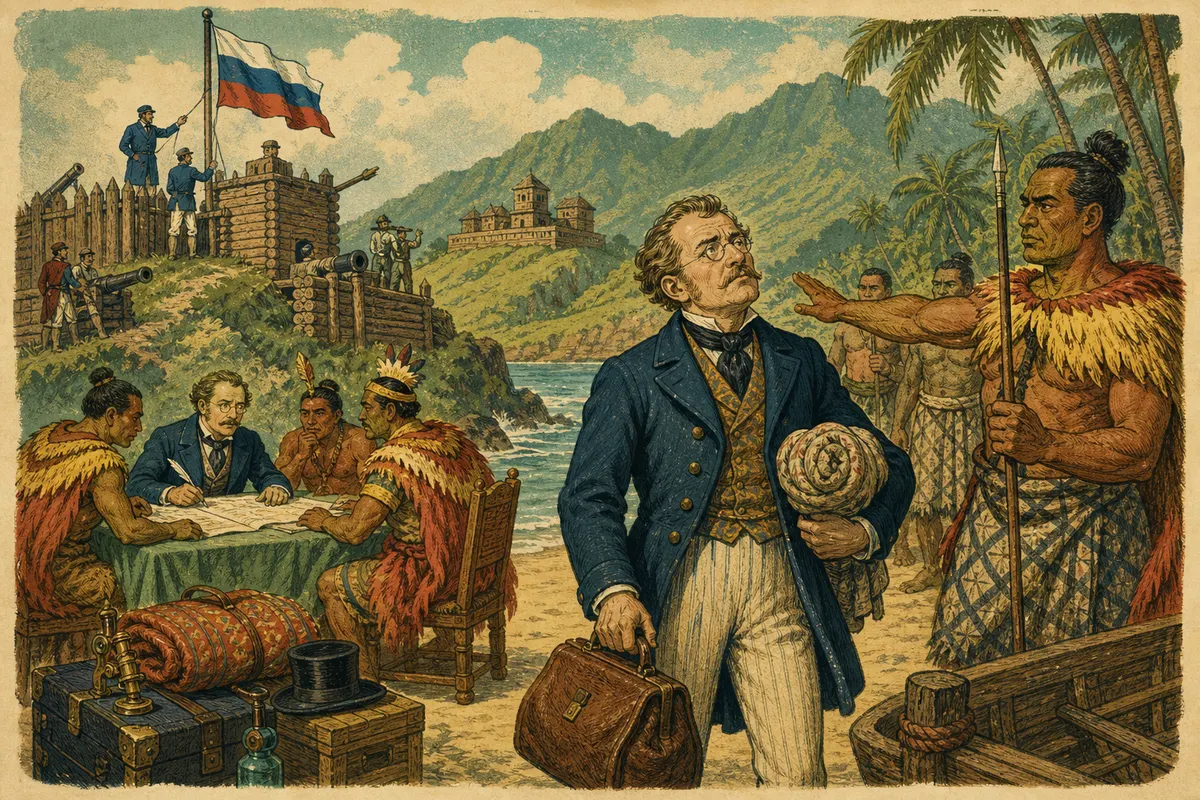
A German doctor once built three forts in Hawaii and raised the Russian flag. He had no authority to do any of it. He was eventually expelled from Kauaʻi, which, all things considered, is a fairly polite outcome for someone who tried to claim a Pacific island chain on behalf of an empire that hadn’t asked him to.

That is the story that opens today’s episode. And 19 July, it turns out, has a lot of nerve.

The Unauthorised Diplomat

Georg Anton Schäffer arrived in the Hawaiian Islands in 1815 on behalf of the Russian-American Company, sent to recover stolen cargo. What he actually did was sign treaties with King Kaumualiʻi, a local ruler keen to escape Kamehameha’s dominance, promise Russian military support he had no authority to promise, and build three forts. The Russian flag flew. The warships never came. On 19 July 1817, Schäffer was expelled from Kauaʻi, ending one of history’s most audacious unauthorised diplomatic ventures.

He had committed to the bit. He simply lacked the warships, and the authorisation, to back it up.

The Secret That Quietly Reshaped a Cold War

On 19 July 1981, French President François Mitterrand handed Ronald Reagan the Farewell Dossier in Ottawa: intelligence revealing a massive Soviet operation to steal Western technology. The CIA’s response was elegant in a quietly alarming way. They fed the KGB subtly sabotaged secrets, including flawed pipeline software that allegedly caused one of the largest non-nuclear explosions ever recorded, in Siberia in 1982. This was a Cold War victory won in a quiet room, and most people have never heard of it.

Springsteen and the Foreshadowing Nobody Wanted

On the same date in 1988, Bruce Springsteen played to between 160,000 and 300,000 people in East Berlin, the largest concert in Eastern Bloc history. He spoke about barriers coming down. Communist authorities had hoped the concert would demonstrate their cultural openness; they got sixteen months of foreshadowing before the Berlin Wall fell instead.

One Surgical Milestone for the Road

On 19 July 2003, surgeons at Vienna General Hospital completed the world’s first successful human tongue transplant after fourteen hours of surgery involving over thirty specialists, restoring a cancer patient’s ability to speak, taste, and swallow. Quietly extraordinary, as medicine occasionally is.

Four stories. One date. Ten minutes. You know what to do.

In this episode

  • Intro Opening hook about a German doctor being expelled from Hawaii in 1817 after attempting to claim the islands for Russia, and introduction to the episode’s themes of ambitious plans and historical overconfidence.
  • The Doctor Who Tried to Steal Hawaii for Russia The full story of Georg Anton Schäffer, sent by the Russian-American Company in 1815 to recover stolen cargo but instead signing unauthorised treaties with King Kaumualiʻi, building three forts, and promising Russian military support he had no authority to deliver. His expulsion on 19 July 1817 ended one of history’s most audacious unauthorised diplomatic ventures.
  • The Farewell Dossier: A Secret That Changed the Cold War On 19 July 1981, François Mitterrand privately shared the Farewell Dossier with Ronald Reagan in Ottawa, revealing massive Soviet technology theft operations. The CIA’s decision to feed sabotaged secrets back to the KGB, including flawed pipeline software that allegedly caused a catastrophic 1982 Siberian explosion, quietly reshaped the Cold War.
  • Springsteen Behind the Iron Curtain Bruce Springsteen’s 19 July 1988 concert in East Berlin drew between 160,000 and 300,000 people, the largest concert in Eastern Bloc history. His speech about barriers coming down, sixteen months before the Berlin Wall fell, made Communist authorities profoundly uneasy about the cultural openness they thought they were demonstrating.
  • The World’s First Tongue Transplant On 19 July 2003, surgeons at Vienna General Hospital completed the world’s first successful human tongue transplant after fourteen hours of surgery involving over thirty specialists, restoring speech, taste, and swallowing capacity to a patient who had lost their tongue to cancer.
  • Outro Closing reflections on the four stories from 19 July across different centuries, connecting themes of human ambition, quiet historical moments, and overconfidence.

Sources

More from the archive

7 min

Collision of the Unexpected: Trump, Vigdís, and Kelston's Ingenuity

In this episode of The Daily Time Drop, host Clare Vale unravels a tapestry of global historical moments that reveal the unpredictable dance between human endeavour and fate. We begin with former US President Donald Trump’s third indictment in 2023, a significant event intertwining political accountability and democratic principles. The discussion then shifts to 1980, where Vigdís Finnbogadóttir’s election as Iceland’s President marked a breakthrough for gender equality, inspiring communities worldwide. The launch of Microsoft Office in 1989 is highlighted as a pivotal moment that revolutionised productivity and digital working environments. Closing with a story from 2014, Clare explores the Kelston toll road, a symbol of community action and creative solutions. Each story underscores the power of human agency and the enduring impact of leadership, innovation, and collective action.

Read & listen →
4 min

Moon Crashes and Floral Penalties

In this episode of The Daily Time Drop, host Clara Vale explores two intriguing stories of human ambition and unexpected results. First, we delve into NASA’s audacious 1999 mission to crash the Lunar Prospector into the Moon—a planned cosmic collision intended to reveal hidden mysteries. Despite the dramatic impact, the hoped-for evidence of water ice remained elusive. Then, travel back to 1703 to witness how Daniel Defoe, the famous author of ‘Robinson Crusoe’, faced public punishment for his biting satire. Intended to be a spectacle of shame, Defoe’s pillory became an inspired moment when the crowd showered him with flowers instead of insults. Join us as we examine these tales of scientific daring and literary defiance, underscoring the unpredictable nature of human endeavours.

Read & listen →
5 min

Echoes of Extinction: The Pyrenean Ibex's Brief Return

Join Clara Vale on The Daily Time Drop as she unravels a tapestry of intriguing historical moments. Discover the extraordinary tale of the Pyrenean ibex, a species that defied extinction only to face it again. Step into the vibrant energy of Tomorrowland, where Charlotte de Witte’s groundbreaking performance changed the face of techno music. Bid adieu to the classic Volkswagen Beetle, an automotive icon whose journey ended in 2003. Finally, witness Lisa Leslie’s historic slam dunk in the Women’s National Basketball Association, a defining moment that challenged perceptions of women in sport. Through these stories, Clara invites us to reflect on human ingenuity, nature’s unpredictability, and the ever-present dance with overconfidence.

Read & listen →