On this day · 17 June 2026

The Fireman Who Sat on the Safety Valve and the Last Sparrow

· 8 min

The Fireman Who Sat on the Safety Valve and the Last Sparrow

Listen to this episode

8 min

Both stories turn on the same instinct: treating a warning signal as an inconvenience rather than information. That particular habit has not aged out of the human species, which makes 17 June worth thinking about.

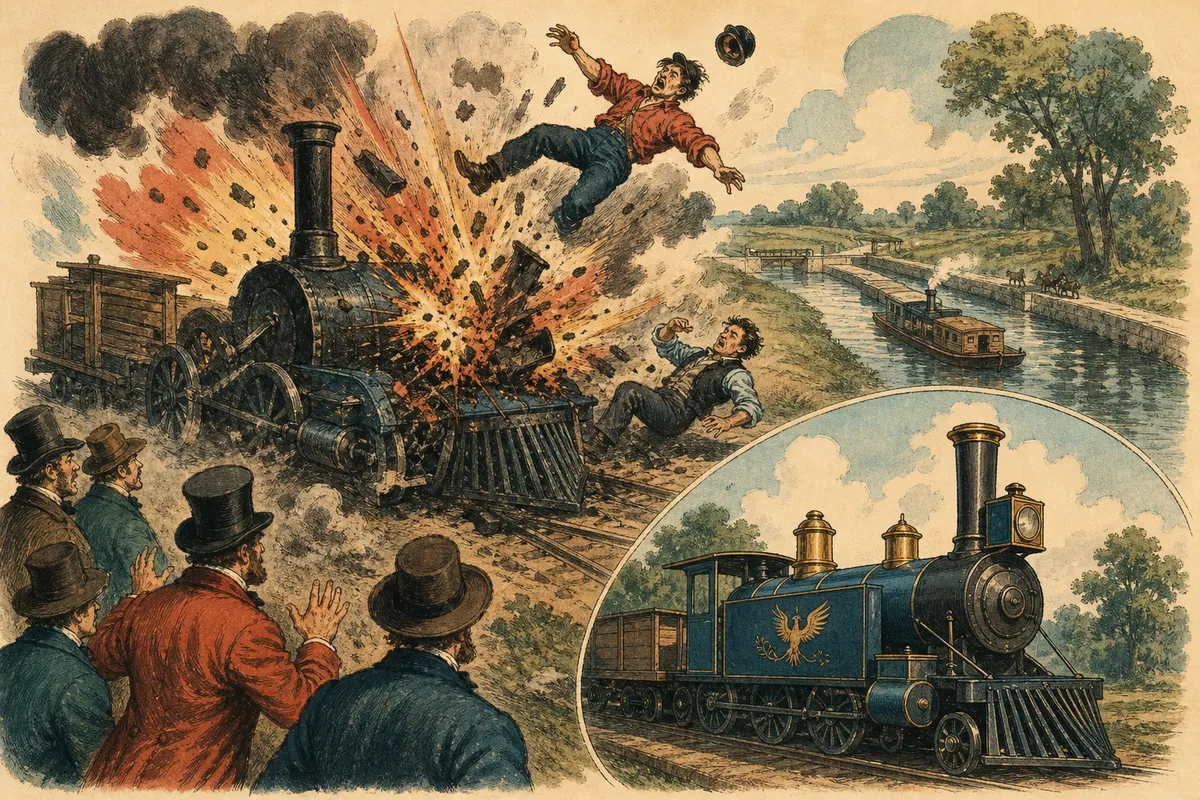
On 17 June 1831, a fireman aboard America’s first commercially built steam locomotive grew tired of the hissing coming from the safety valve. His solution was to hold it shut. The boiler exploded, killing him and destroying the locomotive. The safety valve, it turned out, was doing exactly what it was designed to do.

The Best Friend of Charleston

The locomotive was called the Best Friend of Charleston, and up to that point it had actually been running rather well. It was a genuine milestone in American transport, a steam engine built specifically for commercial service, and it worked. Right up until someone decided the noise was too much to bear.

The explosion killed the fireman and injured the engineer. The South Carolina Canal and Rail Road Company did not abandon steam power. They rebuilt the locomotive, named it the Phoenix, and introduced cotton bale buffers between the engine and the passenger carriages. It was an early, practical attempt at railway safety, and the whole sorry incident became a foundational lesson in American railway history. Progress sometimes requires catastrophe to get organised.

Orange Band

One hundred and fifty-six years later, on the same date, a small bird named Orange Band died at Disney’s Discovery Island at Walt Disney World. He was the last dusky seaside sparrow.

The subspecies had been disappearing quietly for decades. Drainage, development, and mosquito control efforts around the Kennedy Space Center had destroyed its habitat. By 1980, only six males remained. A crossbreeding programme was attempted and ultimately failed. On 17 June 1987, with Orange Band’s death, the subspecies went extinct.

Orange Band had a name because someone was paying attention. The sadness is that by the time people were paying sufficient attention to give him a name, there was no longer anything to be done.

Two Warnings, One Date

This episode is really about what happens when a system tries to tell you something and you choose not to listen. A boiler hisses because pressure is building. A species dwindles because its world is shrinking. Both were communicating something, clearly, for some time, before silence was chosen over inconvenience.

17 June holds both an explosion and an extinction: one loud and immediate, one slow and long in coming. Together they make a surprisingly coherent argument.

The episode is ten minutes long. The lesson took considerably longer to learn. Give it a listen.

In this episode

  • Intro A man annoyed by a hissing noise sat on the valve that was stopping a boiler from exploding. The boiler exploded. Clara introduces the show and sets up a story about humans, new technology, and preventable disasters.
  • Best Friend of Charleston The Best Friend of Charleston was America’s first steam locomotive built for commercial service. It ran successfully for months until 17 June 1831, when the fireman, irritated by the safety valve’s hissing, held it shut. The boiler exploded, killing the fireman and destroying the locomotive. The company rebuilt it as the Phoenix and introduced cotton bale buffers as an early safety measure. The explosion became a foundational lesson in American railway safety.
  • CTA Clara invites listeners to follow the show and share it with curious friends.
  • Dusky Seaside Sparrow On 17 June 1987, Orange Band, the last dusky seaside sparrow, died at Disney’s Discovery Island. The bird’s habitat was destroyed by drainage, development, and mosquito control efforts around the Kennedy Space Center. By 1980, only six males remained. A crossbreeding programme failed, and the subspecies went extinct. Clara reflects on what history remembers and what it forgets.
  • Outro Clara closes with reflections on warnings ignored, the cost of inattention, and the dual meaning of 17 June: an explosion that started something and a quiet extinction that ended something.

Sources

More from the archive

7 min

Collision of the Unexpected: Trump, Vigdís, and Kelston's Ingenuity

In this episode of The Daily Time Drop, host Clare Vale unravels a tapestry of global historical moments that reveal the unpredictable dance between human endeavour and fate. We begin with former US President Donald Trump’s third indictment in 2023, a significant event intertwining political accountability and democratic principles. The discussion then shifts to 1980, where Vigdís Finnbogadóttir’s election as Iceland’s President marked a breakthrough for gender equality, inspiring communities worldwide. The launch of Microsoft Office in 1989 is highlighted as a pivotal moment that revolutionised productivity and digital working environments. Closing with a story from 2014, Clare explores the Kelston toll road, a symbol of community action and creative solutions. Each story underscores the power of human agency and the enduring impact of leadership, innovation, and collective action.

Read & listen →
4 min

Moon Crashes and Floral Penalties

In this episode of The Daily Time Drop, host Clara Vale explores two intriguing stories of human ambition and unexpected results. First, we delve into NASA’s audacious 1999 mission to crash the Lunar Prospector into the Moon—a planned cosmic collision intended to reveal hidden mysteries. Despite the dramatic impact, the hoped-for evidence of water ice remained elusive. Then, travel back to 1703 to witness how Daniel Defoe, the famous author of ‘Robinson Crusoe’, faced public punishment for his biting satire. Intended to be a spectacle of shame, Defoe’s pillory became an inspired moment when the crowd showered him with flowers instead of insults. Join us as we examine these tales of scientific daring and literary defiance, underscoring the unpredictable nature of human endeavours.

Read & listen →
5 min

Echoes of Extinction: The Pyrenean Ibex's Brief Return

Join Clara Vale on The Daily Time Drop as she unravels a tapestry of intriguing historical moments. Discover the extraordinary tale of the Pyrenean ibex, a species that defied extinction only to face it again. Step into the vibrant energy of Tomorrowland, where Charlotte de Witte’s groundbreaking performance changed the face of techno music. Bid adieu to the classic Volkswagen Beetle, an automotive icon whose journey ended in 2003. Finally, witness Lisa Leslie’s historic slam dunk in the Women’s National Basketball Association, a defining moment that challenged perceptions of women in sport. Through these stories, Clara invites us to reflect on human ingenuity, nature’s unpredictability, and the ever-present dance with overconfidence.

Read & listen →