On this day · 9 June 2026

A Reporter's Secret Life and the Question That Broke McCarthy

Episode 9 · 9 min

A Reporter's Secret Life and the Question That Broke McCarthy

Listen to this episode

9 min

The line between access and complicity in journalism is still worth arguing about, and the idea that a single, calm, unanswerable question can shift national sentiment turns out to be perennially relevant.

Sometimes the most important question is the one nobody has got around to asking yet. On 9 June 1954, a Boston lawyer asked it in front of a television audience of millions, and it ended a senator’s career. But let’s start twenty-four years earlier, with a man who received a very different kind of public exposure.

The Reporter Who Wasn’t

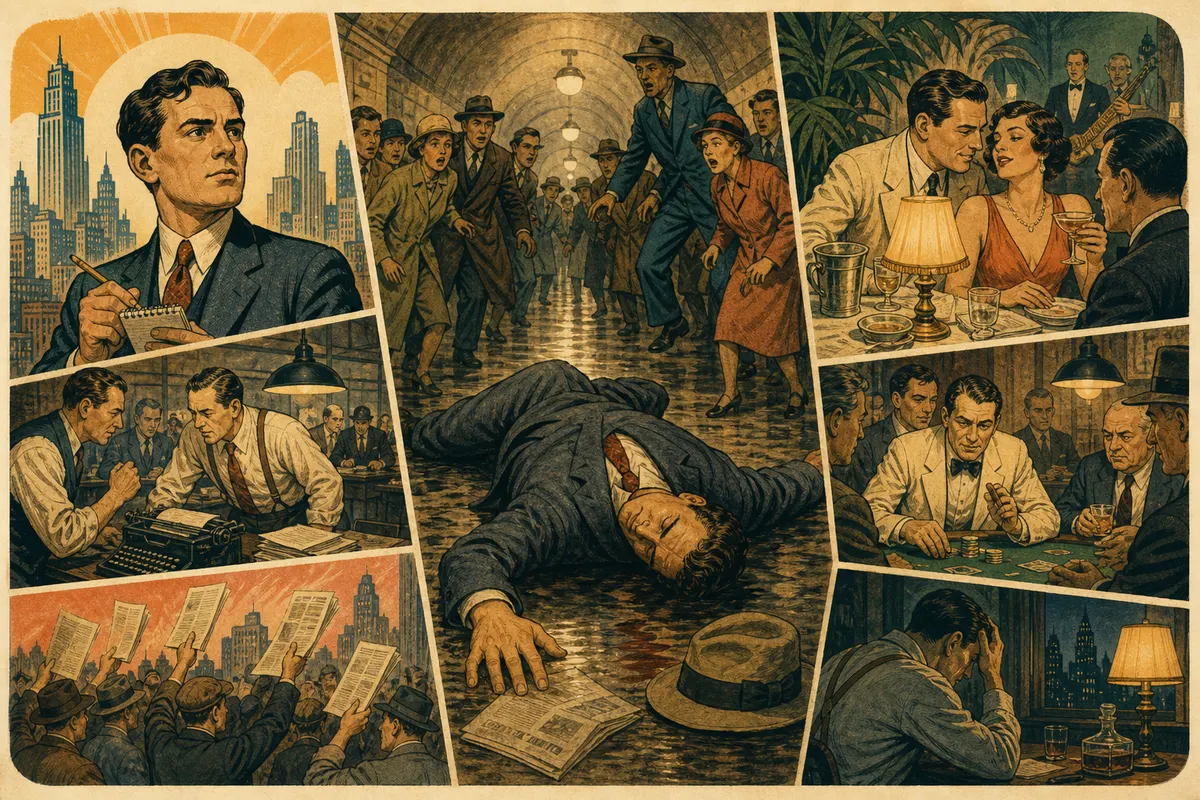
On 9 June 1930, Chicago Tribune reporter Jake Lingle was shot dead in a crowded pedestrian tunnel beneath Michigan Avenue during rush hour. The Tribune responded with the outrage you might expect: Lingle was declared a journalistic martyr, a brave man silenced for asking too many questions.

Then other people started asking a few questions of their own.

It emerged that Lingle had been living well beyond any reporter’s salary. He also maintained close ties to Al Capone and allegedly owed the gangster’s organisation $100,000 in gambling debts. The martyr story did not survive contact with the facts.

The Lingle case did not just embarrass the Tribune. It forced American journalism to confront a distinction that is genuinely uncomfortable: access and independence are not the same thing. Being close to power, knowing its secrets, sharing its company, none of that makes you its watchdog.

Have You No Sense of Decency?

Twenty-four years later to the day, a very different reckoning was playing out on live television. Senator Joseph McCarthy, by 1954 a figure of considerable national dread, was at the Army-McCarthy hearings. Then he publicly attacked a young associate at the firm of Boston lawyer Joseph Welch.

Welch’s response was quiet, calm, and completely devastating.

“Have you no sense of decency, sir, at long last?” The room applauded. McCarthy, who had survived accusations, counter-attacks, and years of political machinery, had no real answer to a simple appeal to basic human decency.

McCarthy was censured by the Senate later that year. What is striking about the moment is that procedural battles and political manoeuvrings had not managed what one quietly spoken question did: it shifted how the whole country felt.

Two Days, One Theme

What connects these two stories, a quarter of a century apart, is the question of accountability. Who watches the people who are supposed to be watching? And what actually happens when someone finally says the thing that everyone else in the room has been thinking?

The full episode runs the two stories in parallel, and the combination is, I think, rather satisfying. It is about ten minutes of your day, and it will give you something worth thinking about for considerably longer than that.

In this episode

  • Jake Lingle: The Reporter Who Wasn’t On 9 June 1930, Chicago Tribune reporter Jake Lingle was murdered in a pedestrian tunnel during rush hour. The Tribune declared him a martyred journalist, but investigations soon revealed he had been living well beyond his salary, maintaining close ties to Al Capone, and allegedly owed $100,000 in gambling debts. The case forced American journalism to confront uncomfortable questions about the line between access and complicity.
  • Have You No Sense of Decency? On 9 June 1954, during the televised Army-McCarthy hearings, Boston lawyer Joseph Welch confronted Senator Joseph McCarthy after the senator publicly attacked a young associate at Welch’s firm. Welch’s calm question, ‘Have you no sense of decency, sir, at long last?’ became a turning point. The room applauded, McCarthy’s power began to deflate, and he was censured by the Senate later that year. The moment demonstrated how a quiet refusal to be intimidated could shift national sentiment.

Sources

More from the archive

7 min

Collision of the Unexpected: Trump, Vigdís, and Kelston's Ingenuity

In this episode of The Daily Time Drop, host Clare Vale unravels a tapestry of global historical moments that reveal the unpredictable dance between human endeavour and fate. We begin with former US President Donald Trump’s third indictment in 2023, a significant event intertwining political accountability and democratic principles. The discussion then shifts to 1980, where Vigdís Finnbogadóttir’s election as Iceland’s President marked a breakthrough for gender equality, inspiring communities worldwide. The launch of Microsoft Office in 1989 is highlighted as a pivotal moment that revolutionised productivity and digital working environments. Closing with a story from 2014, Clare explores the Kelston toll road, a symbol of community action and creative solutions. Each story underscores the power of human agency and the enduring impact of leadership, innovation, and collective action.

Read & listen →
4 min

Moon Crashes and Floral Penalties

In this episode of The Daily Time Drop, host Clara Vale explores two intriguing stories of human ambition and unexpected results. First, we delve into NASA’s audacious 1999 mission to crash the Lunar Prospector into the Moon—a planned cosmic collision intended to reveal hidden mysteries. Despite the dramatic impact, the hoped-for evidence of water ice remained elusive. Then, travel back to 1703 to witness how Daniel Defoe, the famous author of ‘Robinson Crusoe’, faced public punishment for his biting satire. Intended to be a spectacle of shame, Defoe’s pillory became an inspired moment when the crowd showered him with flowers instead of insults. Join us as we examine these tales of scientific daring and literary defiance, underscoring the unpredictable nature of human endeavours.

Read & listen →
5 min

Echoes of Extinction: The Pyrenean Ibex's Brief Return

Join Clara Vale on The Daily Time Drop as she unravels a tapestry of intriguing historical moments. Discover the extraordinary tale of the Pyrenean ibex, a species that defied extinction only to face it again. Step into the vibrant energy of Tomorrowland, where Charlotte de Witte’s groundbreaking performance changed the face of techno music. Bid adieu to the classic Volkswagen Beetle, an automotive icon whose journey ended in 2003. Finally, witness Lisa Leslie’s historic slam dunk in the Women’s National Basketball Association, a defining moment that challenged perceptions of women in sport. Through these stories, Clara invites us to reflect on human ingenuity, nature’s unpredictability, and the ever-present dance with overconfidence.

Read & listen →